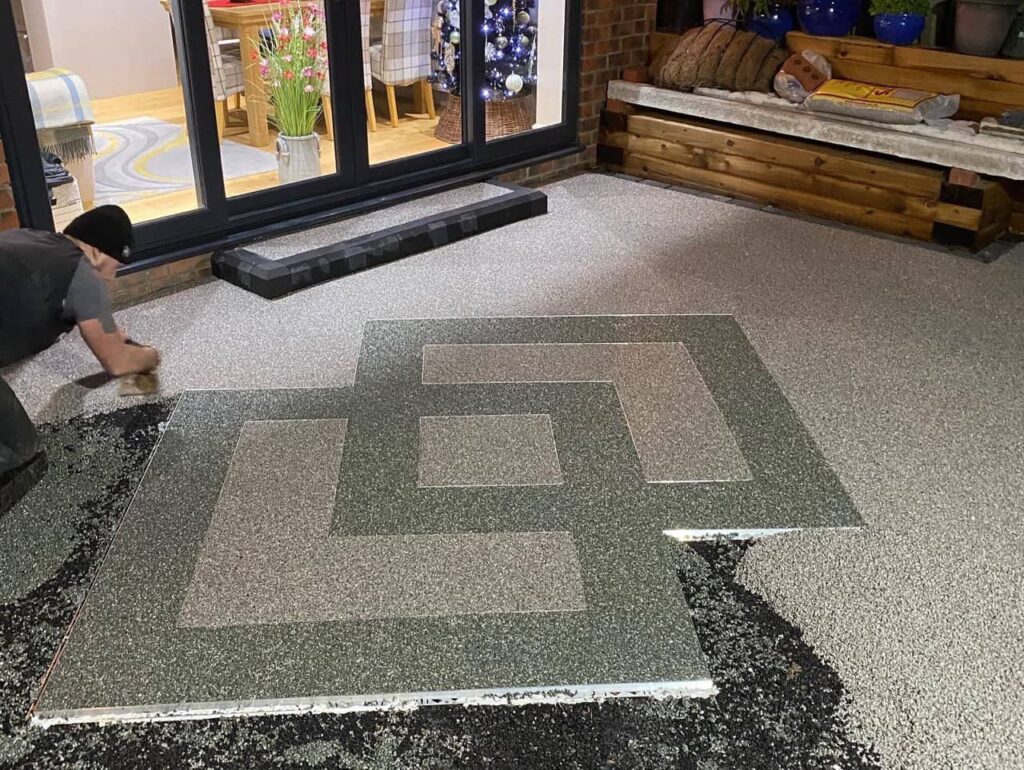
Garden design is highly individual. Some homeowners prefer clean, contemporary layouts with simple lines, while others favour softer planting, curved paths and a more traditional appearance. Choosing a surface that works naturally with the surrounding garden is therefore important. Resin-bound surfacing is particularly versatile because its aggregate finish, seamless appearance and ability to accommodate different shapes allow it to complement a wide variety of outdoor spaces.
At Wigan Resin Driveways, we provide professional resin-bound surfacing throughout Wigan, Greater Manchester, creating driveways, paths and other outdoor surfaces that are planned around the individual character and practical requirements of each property.
What Makes Resin Bound So Versatile?
Resin-bound surfacing is created by mixing selected aggregate with resin before the material is laid and carefully finished.
Unlike surfaces made from individual paving units, resin bound creates a largely continuous finish. This gives installers considerable flexibility when working with different layouts.
It can be used to create:
- Straight paths
- Curved walkways
- Larger paved areas
- Decorative borders
- Defined garden zones
- Connections between different outdoor spaces
This adaptability means the surface can follow the garden design rather than forcing the landscaping into a rigid shape.
A Natural Aggregate Appearance
One of the reasons resin bound suits so many garden styles is its aggregate finish.
The surface retains the visual texture and character of stone while avoiding the movement associated with loose gravel. This allows it to sit comfortably alongside lawns, planting areas, garden features and other landscaping materials.
For homeowners who want a practical surface without an overly harsh appearance, this combination can be particularly effective.
Suitable for Contemporary Garden Designs
Modern gardens often rely on simple shapes, uncluttered layouts and clearly defined spaces.
The smooth, consistent appearance of resin bound works particularly well in this type of environment. It can create clean routes between different parts of the garden without introducing numerous joints or changes in surface level.
Straight edges and carefully selected borders can further emphasise a structured contemporary design.
Equally Effective in Softer Garden Layouts
Not every garden is based around straight lines.
Traditional or informal landscaping often incorporates curved borders, irregular planting areas and pathways that move naturally through the garden.
Resin bound can follow these shapes effectively because it is laid as a continuous material. Curves can be introduced around lawns, planting areas and other features without making the finished surface appear awkward or overly rigid.
Curved Garden Paths Are Easy to Incorporate
Paths play an important role in both the appearance and usability of a garden.
A resin-bound path can be designed to:
- Follow planting beds
- Curve around lawns
- Connect seating areas
- Lead towards garden structures
- Create a route through larger outdoor spaces
This flexibility makes it possible to create pathways that feel integrated into the garden rather than simply cutting across it.
Aggregate Selection Can Influence the Overall Character
The appearance of resin-bound surfacing is strongly influenced by the aggregate used within the system.
Different aggregate combinations can create subtle variations in tone and texture, allowing the finished surface to complement the surrounding garden.
A carefully chosen finish can work alongside existing features rather than competing with them. This is especially valuable where homeowners want a new surface to feel established within an existing landscape.
Borders Can Add Further Design Flexibility
Borders provide another opportunity to customise resin-bound surfacing.
A contrasting edge can help:
- Define the shape of a path
- Separate surfacing from lawns
- Highlight curved sections
- Frame larger areas
- Create a transition between different materials
Borders can be understated or more noticeable depending on the desired appearance.
The important point is that they should contribute to a coherent garden design rather than being added without consideration of the surrounding space.
Resin Bound Can Connect Different Areas
Many gardens contain several distinct zones.
There may be a seating area close to the property, a path leading through planting and another section used for general outdoor activities.
Using resin-bound surfacing to connect these areas can create visual continuity throughout the garden.
A consistent surface helps individual spaces feel related, even where their purposes are quite different.
It Works Well Alongside Other Landscaping Materials
A flexible garden design does not necessarily rely on one material throughout.
Resin bound can be incorporated alongside features such as:
- Lawns
- Planted borders
- Decorative edging
- Garden walls
- Existing paved areas
- Timber landscaping features
Careful detailing where different materials meet helps produce a deliberate and professionally finished appearance.
This ability to work as part of a broader landscaping scheme makes resin bound particularly useful when updating an established garden.
A Seamless Finish Can Make Smaller Gardens Feel Less Cluttered
Numerous joints, patterns and changes in materials can sometimes make a compact garden feel visually busy.
Because resin bound creates a continuous surface, it can provide a cleaner appearance.
Using one consistent finish for paths or other practical areas can simplify the garden visually while allowing planting and landscaping features to remain the main focus.
Larger Gardens Benefit from Design Continuity
In a larger outdoor space, the challenge can be creating connections between areas that are separated by lawns or planting.
Resin-bound paths can provide these links while maintaining a consistent design language throughout the garden.
The same aggregate finish can be repeated in different areas, helping create a sense of continuity without requiring every part of the garden to look identical.
Practical Performance Matters as Much as Appearance
Design flexibility is valuable, but garden surfacing also needs to perform effectively in everyday use.
A professionally installed resin-bound surface provides a firm finish without loose aggregate moving underfoot. This makes it suitable for frequently used garden routes and areas where a stable walking surface is desirable.
Its relatively smooth finish can also make moving everyday garden equipment more straightforward than across loose stone.
Permeability Can Be Incorporated into the Installation
A correctly specified resin-bound system can provide a permeable surface when installed over a suitable permeable construction.
This allows rainfall to pass through the resin-bound layer rather than simply remaining on top.
However, permeability depends on the complete installation rather than the visible resin surface alone. The underlying construction must be designed appropriately if the finished system is intended to allow water to drain through it.
Good Preparation Allows the Design to Perform Properly
The versatility of resin bound should never distract from the importance of what lies underneath it.
Regardless of whether the finished surface is straight, curved, contemporary or traditional, it requires a suitable and stable base.
Poor preparation can lead to problems that affect both appearance and performance.
Professional installation therefore considers:
- Existing ground conditions
- Base stability
- Surface levels
- Drainage
- Edge details
- Intended use
- Connections with surrounding surfaces
These technical considerations are essential for turning an attractive design into a dependable finished installation.
Professional Installation Brings the Design Together
Creating resin-bound surfacing that genuinely complements a garden requires more than simply selecting an aggregate.
The layout, curves, edges, transitions and underlying construction all need to be planned together.
At Wigan Resin Driveways, we install resin-bound surfaces throughout Wigan, Greater Manchester, taking into account both the practical requirements of the area and the character of the surrounding property.
This considered approach helps ensure the finished surface looks appropriate within the garden while also providing reliable everyday performance.
Designing Around the Individual Garden
One of the strongest reasons for choosing resin bound is that the surface does not need to follow a standard layout.
A professional installation can be planned around:
- The size of the garden
- Existing landscaping
- Natural walking routes
- Planting areas
- Outdoor seating
- The style of the property
- Other existing surfaces
This allows the finished design to respond to the garden rather than appearing as a generic addition.
Conclusion
Resin bound is flexible enough for different garden styles because it combines the natural appearance of decorative aggregate with the adaptability of a seamless surface. It can form clean straight lines for contemporary landscaping, gentle curves for softer garden designs and coordinated paths that connect different outdoor areas.
Its versatility also extends to aggregate selection, borders and integration with surrounding landscaping. However, the best results depend on professional planning and correct preparation beneath the finished surface.
If you are considering resin-bound surfacing for your garden in Wigan, Greater Manchester, Wigan Resin Driveways can assess your outdoor space and recommend a design suited to its layout and character. Contact our team to discuss your requirements and discover how professionally installed resin-bound surfacing could enhance both the appearance and usability of your garden.
Call us on: 01942 925798
Click here to find out more about Wigan Resin Driveways
Click here to complete our contact form and see how we can help with your driveway needs.