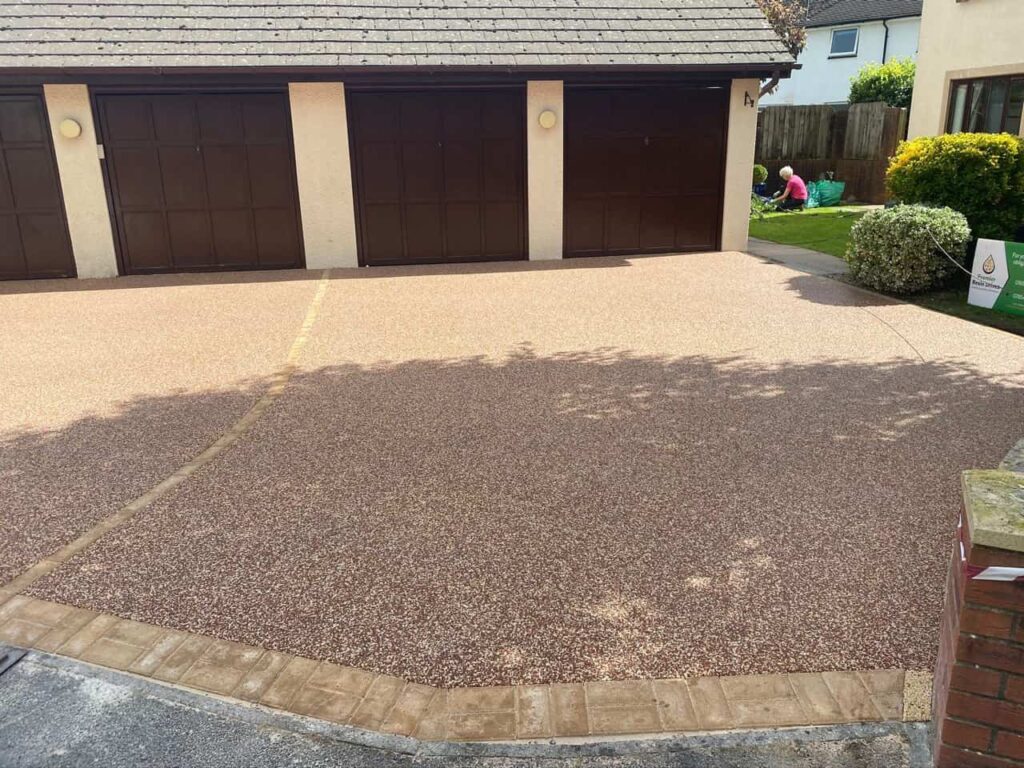
The entrance to a property has both a practical and visual role. It needs to provide a dependable surface for vehicles and pedestrians, but it also occupies a prominent position at the front of the property. When an existing driveway becomes faded, cracked, uneven or generally worn, the whole entrance can begin to look neglected even when the surrounding property remains well maintained.
A professionally installed resin-bound driveway can provide a significant improvement, creating a smooth, consistent and contemporary surface. However, the transformation should involve more than simply covering the existing driveway with a new material. The condition of the base, existing levels, drainage and areas of movement all need to be considered before the resin surface is installed.
For homeowners in Wigan, Greater Manchester, understanding these underlying requirements is important when considering a resin driveway. A high-quality finish depends heavily on what sits beneath the visible surface.
How Can a Resin Driveway Improve a Worn Property Entrance?
A resin-bound driveway can replace a patchy or visually inconsistent entrance with a continuous decorative surface.
The system combines aggregate with resin before the mixture is installed and finished to create an even surface. This provides a different appearance from paving made from individual blocks or slabs and can work particularly well where a clean, unified finish is desired.
However, the quality of the transformation depends on correct preparation. A new resin surface should be installed as part of a properly considered driveway system rather than used to disguise unresolved defects underneath.
A Continuous Surface Can Create a Cleaner Appearance
Older driveways often become visually fragmented.
Previous repairs, staining, faded materials and different areas of wear can leave the entrance looking inconsistent.
A resin-bound surface creates a continuous finish across the prepared area.
This can make the driveway appear more organised and clearly defined while reducing the visual interruption created by numerous joints or previous patch repairs.
Resin Can Give an Older Entrance a More Contemporary Finish
Driveway materials influence the overall appearance of the front of a property.
An ageing surface can make an otherwise well-kept entrance appear tired.
Resin-bound surfacing provides a neat, modern finish that can help give the area a renewed appearance.
The improvement is particularly noticeable when the previous driveway contains multiple patches, surface deterioration or inconsistent materials.
Appearance Should Not Be the Only Consideration
Although resin driveways are often chosen partly for their appearance, visual improvement should not be the only objective.
A driveway must also accommodate regular vehicle and pedestrian use.
The underlying construction therefore matters just as much as the decorative finish.
Before installation, the existing driveway should be assessed to determine whether its base provides suitable support or whether further preparation is required.
A New Surface Cannot Correct an Unstable Foundation
One of the most important principles of driveway installation is that the visible surface depends on the layers beneath it.
If an existing driveway has substantial settlement, movement or inadequate support, installing resin directly over it does not remove those problems.
Movement beneath the surface can eventually affect the new finish.
Professional installation therefore begins by assessing why the existing driveway has deteriorated rather than assuming that every worn surface is suitable for immediate overlay.
Existing Cracks Should Be Investigated
Cracking can develop for several reasons.
Some cracks may be limited to an ageing surface, while others can indicate movement within the underlying construction.
Simply hiding them beneath a new finish does not necessarily provide a lasting solution.
The location, extent and pattern of cracking should be considered before deciding how the area needs to be prepared.
This helps determine whether the existing base can be retained or whether corrective work is necessary.
Sunken Areas Need More Than Cosmetic Improvement
A driveway that contains dips or depressions may have experienced movement beneath the surface.
The affected area may result from inadequate compaction, deterioration of the underlying base or another localised issue.
Covering the depression without correcting it can reproduce the same unevenness in the finished driveway.
Professional preparation should establish suitable levels before the resin surface is installed.
The Base Determines How Well the Driveway Is Supported
A resin-bound surface needs a stable and appropriate base.
The base distributes vehicle loads and provides the platform on which the final surface is installed.
If the supporting construction is weak, inconsistent or poorly compacted, the upper surface cannot compensate indefinitely.
This is why the quality of a resin driveway is not determined solely by the resin and aggregate.
Good installation begins much lower within the driveway construction.
Some Existing Driveways May Provide a Suitable Starting Point
Not every worn driveway requires complete reconstruction.
An existing surface may look tired while remaining fundamentally stable.
Where the underlying construction is suitable and the necessary preparation can be completed correctly, it may provide an appropriate base for further work.
The important point is that suitability should be assessed rather than assumed.
A driveway can look poor but remain structurally useful, just as another can appear relatively acceptable while containing underlying weaknesses.
Preparation Should Reflect the Existing Condition
There is no single preparation method that applies to every resin driveway.
The correct approach depends on what is already present.
A stable existing base requires different treatment from a driveway containing substantial settlement or widespread deterioration.
Professional assessment allows preparation to be matched to the actual site rather than treating every entrance identically.
Drainage Should Be Considered Before Installation
Water management is a fundamental part of driveway construction.
Rainfall needs to be considered when establishing levels, edges and the overall surfacing system.
If the existing entrance suffers from persistent standing water, installing a new decorative surface without understanding the cause may leave the underlying issue unresolved.
Drainage should therefore form part of the initial assessment.
Resin-Bound Surfacing Can Offer Permeability
A properly designed resin-bound system can allow water to pass through the surface.
This is one of the practical characteristics associated with resin-bound construction.
However, permeability depends on more than the upper layer.
The complete construction beneath the surface needs to be compatible with the intended drainage approach.
A permeable top layer installed over an unsuitable impermeable foundation does not automatically create a completely permeable driveway system.
Correct Levels Remain Important
Even where a surface allows water through, accurate driveway levels still matter.
Poorly formed areas can create undesirable low points and affect how the entrance functions.
Professional preparation establishes consistent levels before the decorative layer is installed.
This also contributes to a smoother appearance and more comfortable movement across the driveway.
Edges Help Define and Support the Surface
A well-finished driveway should have clearly considered boundaries.
Suitable edging helps define the resin area and provides containment around the perimeter.
This is particularly important where the driveway meets lawns, planting areas, paths or other surfaces.
Carefully formed edges contribute to both the appearance and stability of the finished entrance.
Resin Can Create Clearer Transitions Between Areas
Many entrances contain more than one type of surface.
The driveway may meet a path, doorstep, garage entrance or landscaped section.
Poor transitions can make the area appear disjointed.
A professionally planned resin driveway can establish cleaner connections between these different parts of the entrance.
Levels and edges should be designed so that the complete area feels intentional rather than simply resurfaced.
The Surface Can Improve Pedestrian Use
Driveways are not used exclusively by vehicles.
Residents and visitors regularly walk across them.
An uneven or heavily deteriorated entrance can become uncomfortable to use on foot.
A correctly installed resin-bound surface provides a smooth, consistent finish that can improve the pedestrian experience as well as the appearance of the driveway.
This is especially useful where the driveway also provides the main walking route towards the property.
Uneven Previous Repairs Can Be Addressed During Preparation
Older driveways often contain evidence of previous repairs.
Different materials may have been added at different times, leaving visible patches or variations in level.
Where the underlying construction remains suitable, preparation for a new resin driveway can help create a more unified surface.
However, failed repairs should be investigated rather than simply hidden.
If a patched area has moved repeatedly, its underlying cause may require correction first.
A Resin Driveway Can Make a Large Entrance Look More Unified
Larger driveways can become particularly visually fragmented when different sections have weathered at different rates.
A continuous resin-bound finish can help bring these areas together.
The surface can create a stronger sense that the driveway is one complete part of the property rather than several separate sections.
Achieving this effect still depends on accurate preparation throughout the entire area.
Smaller Entrances Can Also Benefit
A resin driveway does not need to cover a particularly large area to make a noticeable difference.
On a smaller entrance, every section of the driveway is highly visible.
Cracks, worn patches and uneven edges can therefore have a disproportionate effect on appearance.
A carefully installed continuous surface can make the space feel cleaner and better organised.
Colour and Aggregate Choice Influence the Finished Appearance
Resin-bound surfacing is available with different aggregate appearances.
The choice can influence whether the finished entrance feels subtle, traditional or more contemporary.
Rather than selecting a finish in isolation, it can be useful to consider how it relates to the property and surrounding features.
The objective is usually to create a driveway that complements the entrance rather than competes visually with it.
Consistent Installation Is Essential
The resin and aggregate need to be prepared and installed consistently across the driveway.
Variations in mixing or application can affect the finished appearance.
Professional installation therefore requires controlled working methods throughout the surfacing process.
The objective is to create a uniform finish across the complete area rather than obvious differences between individual sections.
Surface Thickness Matters
The finished resin layer needs to be installed appropriately for the particular system and intended application.
It should not simply be spread thinly in an attempt to cover an existing driveway.
The specification of the complete installation should reflect how the surface will be used and the base beneath it.
This reinforces why resin driveway installation is a construction process rather than simply a decorative coating.
Vehicle Use Should Be Considered
Driveways experience repeated loads from parked and moving vehicles.
Certain areas can receive greater use than others.
Vehicle entrances, regular parking positions and turning areas can all experience concentrated activity.
The foundation and surface need to be suitable for these usage patterns.
Understanding how the driveway will actually be used helps inform the preparation and construction approach.
Turning Areas Deserve Particular Attention
Vehicles turning while entering or leaving a driveway place different demands on the surface compared with vehicles travelling in a straight line.
Where an entrance includes regular turning movements, the construction should account for this use.
A high-quality decorative surface is only part of the solution.
The supporting base needs to provide the stability required for the movement occurring above it.
Parking Areas Need Reliable Support
If vehicles regularly remain in the same positions, those areas experience repeated loading.
Weak underlying construction can eventually reveal itself through movement or deformation.
Professional installation considers the driveway as a working surface.
This means assessing how loads will be supported rather than concentrating solely on how the driveway will look when first completed.
Resin Can Help Define the Entrance More Clearly
A tired driveway can sometimes blend awkwardly into surrounding areas because its boundaries have become unclear.
Defined edges and a consistent resin surface can create a stronger visual entrance.
This can make the relationship between driveway, paths and landscaped sections easier to understand.
Good design is often about clarity rather than adding unnecessary complexity.
The Driveway Can Complement Surrounding Landscaping
A driveway forms part of the wider exterior of the property.
Its shape, edges and finish can influence how surrounding lawns, planting and paths are perceived.
A worn driveway can distract from these features.
A renewed resin surface can provide a cleaner background that allows the rest of the entrance to appear more organised.
This is one reason the transformation can feel greater than simply replacing one surface material with another.
Weed Growth Can Be Reduced With a Continuous Surface
Traditional surfaces containing numerous joints can provide spaces where unwanted growth becomes visible.
A resin-bound driveway creates a largely continuous upper surface.
Although no outdoor surface should be considered completely maintenance-free, reducing the number of open joints can create a cleaner appearance and simplify routine upkeep.
Correct construction around edges remains important, as boundaries are often areas where vegetation can begin to intrude.
Resin Driveways Still Require Maintenance
A new resin driveway should not be treated as a surface that can simply be ignored indefinitely.
Leaves, soil and other debris can accumulate over time.
Routine cleaning helps keep the surface looking tidy and reduces the opportunity for organic material to remain on it.
Drainage routes should also remain unobstructed where applicable.
Appropriate maintenance helps preserve the appearance and function established during installation.
A New Surface Should Address the Cause of Previous Deterioration
If the old driveway failed because of underlying movement, poor drainage or inadequate support, those problems should inform the new installation.
Otherwise, the replacement surface may eventually begin showing similar symptoms.
This is where professional assessment adds considerable value.
The existing driveway provides clues about how the site behaves, allowing the new construction to address weaknesses rather than simply conceal them.
Resurfacing and Reconstruction Are Not the Same
A tired driveway does not always need the same level of work.
Where a stable and appropriate base remains, preparation and resurfacing may be possible.
Where substantial movement or deterioration affects the foundation, more extensive reconstruction may be necessary before a resin finish can be installed.
The correct decision depends on condition rather than appearance alone.
The Entire Driveway Should Be Assessed
Concentrating only on the worst-looking section can give an incomplete picture.
One area may contain severe cracking while the rest of the driveway remains stable.
Alternatively, small defects may appear throughout the entrance because the underlying construction is deteriorating more generally.
Assessing the complete area helps determine whether the problem is localised or widespread.
What Should Be Checked Before Installing a Resin Driveway?
Before deciding how a worn entrance should be transformed, it is useful to consider:
- The condition of the existing surface
- Whether cracks are isolated or widespread
- Areas of settlement or movement
- The stability of the existing base
- Current driveway levels
- How rainfall is managed
- Whether standing water develops
- The condition of driveway edges
- Vehicle parking and turning patterns
- Connections with paths and surrounding areas
- The suitability of the proposed resin system
- The level of preparation required
These factors help determine what work is needed beneath the finished surface.
Professional Preparation Makes the Visual Transformation More Meaningful
A newly installed resin surface can immediately change the appearance of an entrance.
The longer-term quality of that improvement, however, depends on preparation.
Correcting unsuitable levels, addressing unstable sections and ensuring that the base is appropriate gives the decorative finish a much stronger foundation.
This is why professional resin driveway installation should focus equally on what will be seen and what will remain hidden beneath the surface.
A Tired Appearance Does Not Always Mean the Complete Base Has Failed
It is important not to assume that an unattractive driveway automatically requires complete reconstruction.
Surface weathering and visual deterioration can sometimes occur while the underlying base remains serviceable.
Professional assessment can identify what can reasonably be retained.
This avoids unnecessary work while ensuring that unsuitable areas are corrected before the resin is installed.
Equally, a New Surface Should Not Be Used to Hide Serious Defects
The opposite mistake is assuming that resin can simply cover every existing problem.
Substantial cracks, settlement, unstable areas and persistent drainage issues deserve investigation.
If these defects originate beneath the surface, hiding them does not remove their cause.
A durable transformation begins by creating suitable conditions for the new driveway.
Why Professional Resin Driveway Installation Matters
A resin-bound driveway relies on several elements working together.
The existing ground or base, preparation, levels, drainage, edge details and final resin surface all contribute to the finished result.
Professional installation considers these elements as one complete system.
This approach helps create an entrance that does more than look improved immediately after installation. It provides a properly prepared surface designed around the way the driveway will actually be used.
Resin Driveways in Wigan, Greater Manchester
At Wigan Resin Driveways, we assess the existing entrance before determining the preparation required for a new resin-bound surface.
A tired driveway may simply require suitable preparation over a stable base, while cracking, settlement or drainage problems may indicate that additional work is necessary before surfacing begins.
For properties in Wigan, Greater Manchester, our focus is on creating a well-prepared, consistent resin driveway that improves the appearance and everyday usability of the entrance without overlooking the condition beneath it.
Conclusion
A resin driveway can transform a tired or worn entrance by replacing an inconsistent, cracked or weathered appearance with a smooth and unified surface. It can also create clearer edges, improve connections with surrounding areas and provide a practical surface for everyday vehicle and pedestrian use.
The success of that transformation depends on much more than the resin itself. Existing cracks, settlement, drainage, levels and base stability should all be assessed before installation. Where the underlying construction is suitable, it may be possible to retain it; where defects originate deeper within the driveway, those problems should be addressed first.
If you are considering improving a worn entrance in Wigan, Greater Manchester, contact Wigan Resin Driveways to arrange an assessment. We can examine the existing surface and base conditions and recommend an appropriate approach for creating a professionally installed resin-bound driveway.
Call us on: 01942 925798
Click here to find out more about Wigan Resin Driveways
Click here to complete our contact form and see how we can help with your driveway needs.